The Anime That Never Was: How Fans Mourn — and Build — Worlds That Only Exist in Their Imagination
There's a specific kind of heartbreak that only anime fans understand. It's not the grief of a canceled show or a disappointing finale. It's quieter than that — and in some ways, heavier. It's the ache of a story you love deeply that never got its moment on screen. The manga you've read three times. The light novel series you've pressed into the hands of every friend you trust. The property that should have been animated years ago and, for reasons that feel increasingly personal, just... wasn't.
Fans of titles like Dungeon Meshi waited years before their adaptation finally arrived. But for every series that eventually gets its turn, there are dozens that don't. And the communities that form around those unadapted stories? They're doing something quietly remarkable.
The Specific Grief of the Unmade Show
When fans talk about wanting an anime adaptation, it's easy to dismiss that as simple enthusiasm. But dig a little deeper and you find something more layered. For a lot of readers, imagining their favorite story animated isn't just wishful thinking — it's a form of emotional investment. You start hearing the opening theme in your head. You mentally cast the voice actors. You picture which studio would nail the art style.
When that version of the story never materializes, there's a real sense of loss. Not just for yourself, but for something you wanted to share. Anime has a cultural reach that manga and light novels, for all their devoted readership, don't quite match in the same way. An adaptation means your story gets a trailer. It gets a Reddit thread with 40,000 comments. It gets the chance to pull in people who would never have picked up the source material.
Without that, the story stays in a smaller room. And while that room can be warm and close-knit, there's still grief in knowing the door might never open wider.
What Fans Build in the Void
Here's what's fascinating, though: that grief doesn't sit still. It moves. It transforms. And what it tends to transform into is creation.
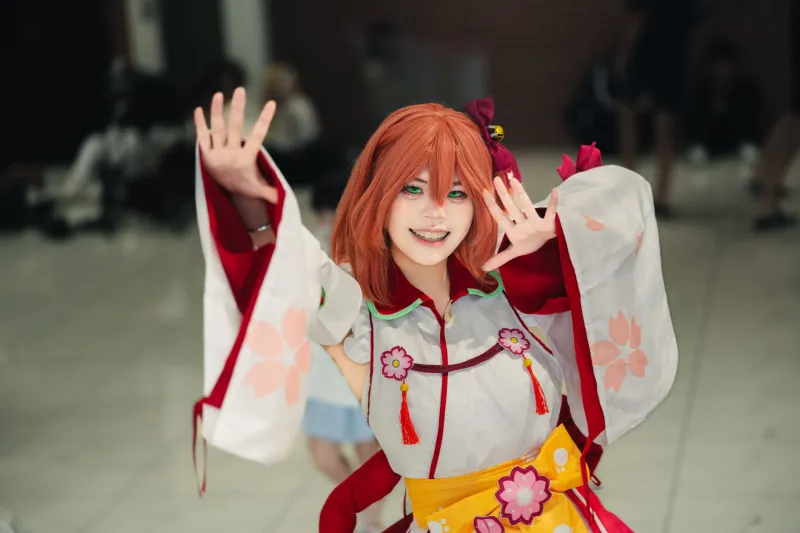
Fan communities built around unadapted properties often develop some of the most vivid, imaginative content ecosystems you'll find anywhere in fandom. Fan artists fill the visual gap by rendering scenes in styles that feel unmistakably anime — dynamic action panels, soft slice-of-life moments, that specific quality of light that makes animated stills feel alive. Fan fiction writers give voice to characters who have never technically spoken out loud in any official capacity. Playlist curators on Spotify build out entire imaginary soundtracks, picking tracks that feel like they belong to an OP or an emotional climax that no one has ever actually produced.
There's even a genre of fan content that's almost meta: mock trailers edited together from existing anime clips, fan-made casting calls, community polls debating which studio should theoretically handle the adaptation. These aren't just fun exercises. They're acts of collective world-building. They're communities saying: if the industry won't give us this, we'll make it ourselves.
The Paradox of the Tighter Bond
This is where things get genuinely interesting from a community perspective. You'd expect that the absence of an official adaptation would weaken a fandom — fewer entry points, less mainstream visibility, no shared viewing experience to rally around. And in some ways, that's true. These communities tend to stay smaller.
But smaller doesn't mean weaker. In fact, the fans who stick around for an unadapted property often describe their communities as some of the most meaningful connections they've made in fandom spaces. There's a self-selection happening. The people who found this story did it through word of mouth, through a recommendation from someone who really knew them, through their own curiosity. They didn't stumble in because a trailer went viral. They came because they were looking for something specific, and they found it.
And when you're all operating from the same source material — the same chapters, the same illustrations, the same author notes — there's a kind of intimacy to the shared experience. You're not debating anime-original scenes or arguing about whether the adaptation did the arc justice. You're all working from the same text, building your interpretations together from scratch.
The Community as the Adaptation
Some fans have started talking about this in a way that reframes the whole experience. Rather than seeing the lack of an anime as a deficit, they've started to think of the community itself as the adaptation. The fan art is the visual language of the story. The fan fiction is the extended universe. The Discord servers and subreddits and Tumblr threads are the fandom infrastructure that would otherwise be built around an airing season.
It's a generous and genuinely moving way to think about it. The story found its audience. The audience found each other. And together, they made something that exists nowhere officially but feels completely real to everyone inside it.
That's not a consolation prize. That's actually kind of extraordinary.
When an Adaptation Finally Happens — or Doesn't
Of course, the emotional stakes shift dramatically if an adaptation is ever announced. The reaction in these communities is almost never pure joy. It's complicated. There's excitement, yes — but also anxiety. Will the studio get it right? Will the voice casting match the voices they've been hearing in their heads for years? Will the new influx of fans change the community they've built?
And for the properties that never get that announcement — the ones that age out of relevance, whose publishers fold, whose authors move on — there's a different kind of reckoning. A quiet acceptance that this story will always live in the space the community made for it, and nowhere else.
That's not nothing. For the people who were there, who made the fan art and wrote the fic and argued about the characters at 2 a.m. in a Discord server with forty members — it's everything.
The Stories That Live Between Us
Kizuna means bond. And maybe the most honest thing you can say about these communities is that they've built their bonds out of something that technically doesn't exist yet — or might never exist at all. They've taken the outline of a story and filled it in together, thread by thread, drawing by drawing, headcanon by headcanon.
The anime that never gets made doesn't disappear. It just lives somewhere else: in the collective imagination of the people who loved it enough to keep it alive.
And honestly? Some of those versions might be better than anything a studio could have produced anyway.