Frenemies, Rivals, and the Bonds That Hit Harder: Why Anime's Unlikely Duos Are the Best Relationships on Screen
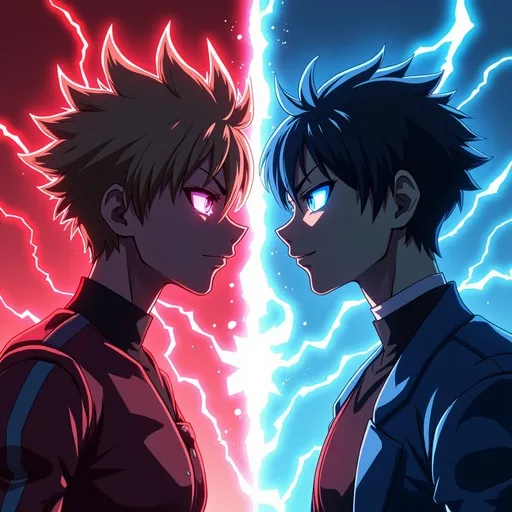
Photo: anime rivals facing each other dramatic confrontation friendship, via images.stockcake.com
There's a specific kind of feeling you get when two characters who absolutely should not care about each other — who have every reason to destroy one another — end up becoming the most emotionally resonant pair in a series. It's not quite friendship. It's not quite rivalry. It's something messier and more honest, and anime has been doing it better than just about any other medium on the planet.
At Kizuna Pop, kizuna — that Japanese concept of deep, almost unbreakable bonds — is kind of our whole thing. But what's fascinating is that the most powerful versions of these bonds in anime rarely come gift-wrapped in warmth and matching friendship bracelets. They're forged in conflict, pressure, and the kind of mutual understanding that only comes from really, truly seeing someone at their worst.
Let's talk about why that matters.
The Yuji and Sukuna Problem (That Isn't Really a Problem)
If you want a crash course in unconventional bonding, look no further than Jujutsu Kaisen. Yuji Itadori literally shares a body with Ryomen Sukuna, a millennia-old cursed spirit who would happily rip him apart if it were convenient. There is no warmth here. Sukuna is contemptuous, violent, and operates on a moral framework that could charitably be described as "pure chaos."
And yet.
The dynamic between them is one of the most talked-about relationships in modern anime for a reason. Sukuna is fascinated by Yuji in a way he can't fully explain — and Yuji, despite everything, carries this creature inside him with a kind of grim responsibility that speaks to something deeply human. It's not friendship. It might not even be respect in the traditional sense. But it's a bond, and a complicated one that forces both characters (and the audience) to sit with moral ambiguity rather than easy answers.
This is a storytelling move that Japanese anime pulls off repeatedly and with real confidence: the idea that proximity, shared experience, and even conflict can create connections that are more meaningful than ones built on simple affection.
Deku and Bakugo: The Long Game of Earned Respect
Over in My Hero Academia, the Deku and Bakugo dynamic is practically a masterclass in how rivalry can function as a vehicle for growth — and, eventually, something that looks a lot like love (in the most shonen-appropriate sense of the word).
Bakugo starts the series as a bully. Not in a cartoonish way — in a recognizable, uncomfortable way. He's talented and he knows it, and Deku's unwavering admiration reads to him as mockery. The resentment is real. The cruelty is real. And then — slowly, painfully, over hundreds of chapters — something shifts.
What makes this work is that neither character compromises who they are. Bakugo doesn't become soft. Deku doesn't stop looking up to him. But they start to understand each other in a way that's only possible because they've been watching each other fail and get back up for years. The bond that emerges isn't sweet. It's hard-won. And for a lot of fans, that's exactly why it hits so much harder than a typical best-friendship arc.
Why Conflict Is the Point
Western storytelling often treats conflict between friends as a problem to be resolved — a bump in the road before things go back to normal. Anime, particularly shonen and seinen series, tends to treat conflict as the foundation. The friction isn't an obstacle to the bond; it's the thing that makes the bond real.
This reflects something genuine about Japanese cultural storytelling traditions. The concept of nakama — often translated loosely as "companions" but carrying much heavier emotional weight — is built on the idea that bonds are proven through hardship, not just declared through proximity. You don't become nakama by hanging out. You become nakama by going through something together.
For US audiences raised on "best friends since kindergarten" narratives, this reframing can feel almost radical. It's saying: you don't have to like someone to be deeply, meaningfully connected to them. You just have to know them.
The Appeal for Modern Audiences
Here's where it gets interesting from a cultural lens. There's real data suggesting that younger American audiences are increasingly drawn to morally complex media — stories where relationships aren't categorized neatly into friend/enemy/love interest boxes. Shows like Succession and Better Call Saul have proven that US audiences will absolutely invest in relationships built on dysfunction and tension.
Anime has been offering this for decades, and the fanbase is catching up. Communities built around series like Vinland Saga (where the central bond between Thorfinn and Askeladd is essentially one long, devastating study in hatred transforming into something else entirely) or Attack on Titan (Eren and Armin, Reiner and Bertholdt — it's complicated, to put it lightly) aren't just watching for action. They're watching for the relationship dynamics.
The parasocial bonds fans form with these characters are often about this complexity. People don't just love Bakugo despite his flaws — they love him because of them, and because watching Deku refuse to give up on him mirrors something they want to believe about human connection in general.
What This Tells Us About What We're Craving
At the end of the day, the popularity of these unconventional anime bonds says something real about what audiences are hungry for. Easy friendships are comforting, sure. But they're also a little hollow when you're an adult who knows that real relationships are rarely tidy.
The bonds that anime keeps returning to — the ones built on rivalry, on shared suffering, on mutual recognition between people who started as opponents — feel earned in a way that resonates. They model a kind of connection that requires work, honesty, and a willingness to be seen by someone who knows exactly how to hurt you.
That's not a friendship trope. That's something closer to the truth.
And maybe that's why these stories keep finding new fans, keep inspiring fan art and fan fiction and Discord debates at 2am, keep generating the kind of passionate community that makes platforms like this one feel necessary. Because kizuna — real kizuna — was never supposed to be easy. It was supposed to be real.