First Comes Love, Then Comes the Season Premiere: Couples Who Schedule Their Lives Around Anime
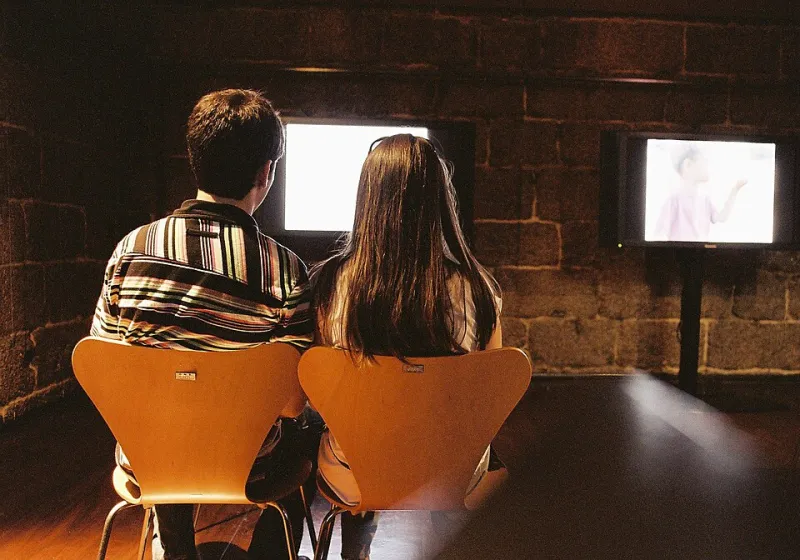
Photo: Miguel Pires da Rosa from Braga, Portugal, CC BY-SA 2.0, via Wikimedia Commons
There's a running joke in certain corners of anime fandom that the most important relationship in a fan's life isn't with their partner — it's with their seasonal watch list. But what happens when those two things stop competing and start collaborating?
For a growing number of couples across the US, the answer is: a whole new relationship language gets invented. One built out of premiere dates, con schedules, and the specific emotional shorthand that only people who've watched the same 200 episodes of something can share.
The Calendar Is Now a Love Language
Kayla and Derek from Portland have been together for four years. They both got into anime separately — she through a college roommate, he through a childhood obsession with Toonami — and discovered their overlap on their third date. That overlap has since become, in Kayla's words, "basically the architecture of how we plan our life."
Derek proposed during the gap between two cours of a long-running series they'd been watching together since nearly the beginning of their relationship. The timing wasn't accidental.
"We'd been talking about the show constantly for months," he says. "It felt like the right moment — this pause before the next big chapter. I wanted the proposal to feel like that too. Like a breath before everything changes."
Kayla laughs and adds that she cried both at the proposal and at the season premiere two months later. "Different reasons. Mostly."
This kind of intentional timing — attaching real-life milestones to moments in a shared fandom — is something more couples are doing, even when they don't fully realize they're doing it.
Why Anime Time Feels Like Real Time
To understand why this happens, it helps to think about what long-form anime actually does to a viewer's sense of time.
A series that runs for several cours, or one that drops a new season every year or two, creates a kind of temporal anchor. You remember where you were in your life when you watched it. You associate specific arcs with specific seasons of your relationship. The show becomes a timeline.
For couples who watch together, that timeline is shared. You both remember the night you stayed up until 2 a.m. to finish an arc. You both remember pausing an episode to have a two-hour conversation it triggered. Those memories attach to the show, and the show carries them forward.
So when a new season drops or a long-awaited film finally hits theaters, it's not just a media event. It's a reunion with a piece of your shared history.
That's why scheduling around those moments starts to feel natural. It's not that the anime is more important than the relationship — it's that the anime has become embedded in the relationship. The two things aren't separate anymore.
Con Season as Relationship Season
Beyond streaming releases, fan conventions have become a major organizing principle for couples in the community. Anime Expo in Los Angeles, Otakon in DC, Anime NYC — these events function as annual relationship checkpoints for a surprising number of couples.
Samantha and Luis from Dallas have attended Anime Expo together every year for the past three years. Their first con together was technically their first trip together as a couple, and the anniversary of that trip has quietly become more significant to them than their actual dating anniversary.
"We celebrate both," Samantha says, "but the con anniversary has this whole energy around it because we're always in the middle of planning for the next one. It's like a holiday that comes with homework."
For them, the lead-up to con season involves collaborative planning that functions almost like a relationship ritual — debating which panels to prioritize, coordinating cosplay concepts, budgeting together. "It's the most organized we ever are," Luis jokes. "Anime makes us functional adults for like six weeks a year."
Other couples describe using convention weekends as natural moments to have bigger relationship conversations — about where things are going, what they want, what comes next. Something about being surrounded by community, by celebration, by shared excitement seems to make those conversations easier.
The Proposal That Required a Spreadsheet
Not everyone's approach is as casual as timing things to a season gap. Some fans go full strategic.
Ryan, 29, from Atlanta, spent three months planning a proposal that he wanted to align with the theatrical release of a film adaptation of a manga he and his girlfriend Priya had read together during the early months of their relationship. The film had been announced, delayed, and re-announced multiple times, which meant Ryan had to build contingency plans.
"I had a spreadsheet," he admits without a trace of embarrassment. "Three different proposal scenarios depending on whether the release date held. I was checking industry news every week."
The release held. The proposal happened the evening after they saw the film together. Priya, who had no idea what was coming, says the timing hit differently than she expected.
"The movie already had me emotional — it was this story we'd loved for years finally on screen," she says. "And then he proposed, and it felt like the whole thing was continuous. Like the story kept going."
That phrase — the story kept going — captures something essential about why these moments land so hard. Anime fans are, at their core, people who invest deeply in narratives. When your relationship becomes part of the narrative, the emotional architecture just makes sense.
Is This a New Thing, or Have We Always Done This?
Couples have always attached meaning to shared experiences — a song that was playing when you met, a movie you saw on your first date. What's different about the anime version isn't the impulse; it's the density of the shared material.
A couple who bonds over a single film has one touchstone. A couple who watches 400 episodes of something together, who follows seasonal releases, who attends annual conventions — they're building an entire cultural infrastructure together. The opportunities for meaningful attachment multiply.
There's also something specific to how anime fandom operates that amplifies this. The community is participatory in a way that passive media consumption isn't. You're discussing, theorizing, reacting, engaging with other fans. When you do all of that with a partner, you're not just watching the same thing — you're co-creating an ongoing experience.
The Language Only You Two Speak
Maybe the most underrated part of building a relationship inside a shared fandom is the private language it generates. Inside references, character comparisons, episode quotes that mean something specific to your dynamic — this stuff accumulates into a vocabulary that belongs only to the two of you.
Kayla puts it simply: "There are things Derek says to me that are technically anime quotes but functionally just mean 'I love you.' Nobody else would know that. That's kind of the point."
That's kizuna in its most personal form — a bond expressed through the specific, irreplaceable shorthand of a shared passion. The premiere dates and the con weekends and the proposal spreadsheets are really just the visible surface of something deeper: two people who found a way to make their love story feel like a story worth following.
And unlike most anime, there's no announced finale. Just the next episode, whenever it comes.