Solo Watch vs. Squad Watch: Why the Same Anime Hits Completely Differently Depending on Who's in the Room

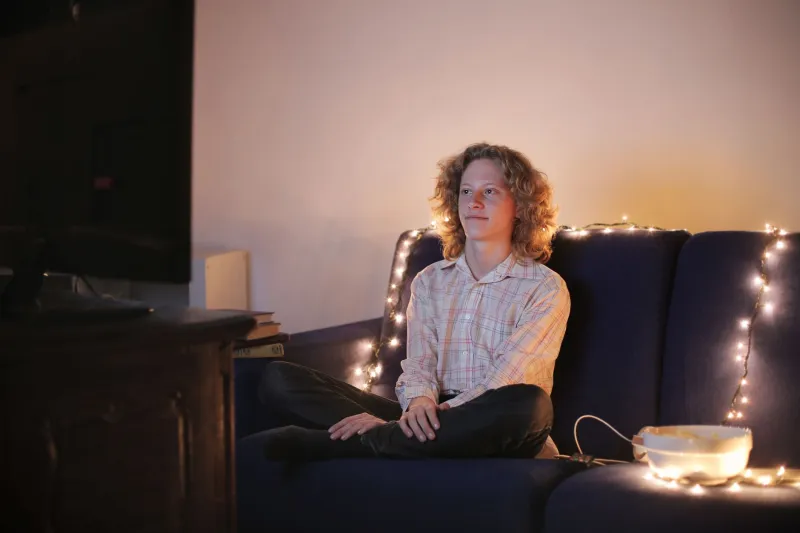
Picture this: you're curled up alone on a Friday night, earbuds in, lights off, watching an anime that absolutely wrecks you. You cry. You pause. You rewind a scene three times because you need to sit with it. Nobody else knows this moment happened. It belongs entirely to you.
Now picture watching that exact same episode with your best friends — someone's laughing at the wrong moment, someone's asking questions over the dialogue, and by the end, you're all kind of emotionally destroyed together in the best possible way.
Same show. Same episode. Completely different experience.
This isn't just about vibes or logistics. The way we consume anime — alone or alongside others — fundamentally changes how we process it emotionally, what we remember, and even which characters we end up attached to. And for a fanbase as passionate and community-driven as the anime world, that distinction matters a lot more than people give it credit for.
The Private Universe of Solo Watching
There's something almost sacred about watching anime alone. When no one else is present, you're not performing your reactions — you're just having them. That ugly cry during a character death? Yours. That embarrassing rewind because a fight scene was too cool to only watch once? Also yours. Solo watching creates a kind of emotional privacy that lets you go deeper into a story without the social layer of managing how you come across.
Psychologists who study narrative transportation — the phenomenon of getting genuinely "lost" in a story — suggest that fewer distractions lead to stronger immersion. When you're solo, there's no one to pull you out of that headspace. The characters start to feel less like fictional people and more like companions. You fill in the silence around them with your own thoughts, your own projections.
This is probably why so many fans describe certain anime as deeply personal, almost untouchable. Neon Genesis Evangelion watched alone at 16 hits differently than NGE watched with a group of friends who keep cracking jokes about the episode titles. One version becomes a mirror. The other becomes a shared comedy of horrors. Neither is wrong — but they're genuinely not the same experience.
Solo watching also tends to produce stronger individual character attachments. Without anyone else to anchor your attention, you naturally gravitate toward whoever resonates with your current emotional state. You might not even realize you've decided a side character is your favorite until you've spent three episodes quietly rooting for them while no one else was around to redirect your attention.
The Amplification Effect of Watching Together
Shared viewing does something solo watching simply can't: it amplifies. Emotions that might have been quiet and internal become loud and collective. A plot twist that would have made you gasp alone becomes an event when three other people gasp alongside you.
This is partly why watch parties — whether in person or over Discord — have become such a staple of modern fan culture. There's a neurological basis for it, too. Humans are wired to sync emotionally with the people around them, a phenomenon sometimes called emotional contagion. When your friend tears up, your body starts prepping to tear up too. When the room erupts, you erupt with it. Group watching essentially turns up the volume on every emotional beat.
But amplification cuts both ways. Scenes that require quiet reflection can get bulldozed when someone in the room needs to process out loud. Comedy lands harder in a group, but so does the risk of a serious moment getting accidentally deflated. The group dynamic becomes its own filter over the story, and sometimes that filter changes the story entirely.
Think about a show like Violet Evergarden. Watched alone, it can be a deeply contemplative, almost meditative experience — each episode a slow emotional unfurling. Watched with a group that's emotionally invested, it can become a communal catharsis, everyone processing grief and longing together in a way that feels almost therapeutic. Both versions are valid. But they're not the same show, experientially speaking.
How Memory Gets Shaped by Who Was There
Here's where it gets really interesting: the context of your viewing doesn't just shape the experience in the moment — it shapes how you remember the anime forever.
Memory is reconstructive. Every time you recall a viewing experience, you're rebuilding it from fragments, and those fragments include the emotional and social context around the content itself. If you watched an anime during a rough patch in your life, alone at midnight, it carries that weight permanently. If you watched it on a road trip with your college friends, laughing and pausing and debating who the best character was, that joy gets baked into how you remember the show.
This is why two people who've both seen the same highly-regarded series can have wildly different opinions about it — and both be telling the truth. One person watched it during a breakup, alone, and found it healing. Another watched it at a con screening surrounded by strangers who were too loud, and it never clicked. The anime didn't change. The container it was poured into did.
Fandom communities feel this tension constantly. When someone says "I didn't really connect with that show," sometimes what they're actually saying is "the circumstances under which I watched it didn't give it a fair shot." And rewatching — a subject anime fans are deeply familiar with — is often less about the show and more about trying to reconstruct or recapture a specific context.
Why This Matters for How We Talk About Anime
Once you start seeing the solo-vs-together divide, you can't unsee it. It shows up in fandom discourse constantly — the person who insists a show is emotionally devastating versus the person who found it kind of shallow, and neither can understand how the other got there.
Maybe the answer isn't always about the writing or the animation or the character arcs. Maybe sometimes it's about whether you were alone in the dark with your headphones on, or surrounded by people who kept pausing to speculate about the next episode.
At Kizuna Pop, we talk a lot about the bonds that form around anime — between fans, between friends, between strangers who became something more. But the bond between a viewer and a show is its own kind of relationship, and like any relationship, it's shaped by the conditions it grew up in.
So the next time someone tells you their experience of a show you love was totally different from yours — believe them. They probably watched it in a completely different universe, even if it was the same streaming platform.
And maybe, if you really love something, it's worth watching it both ways. Once for yourself. Once with your people. You might end up falling for it twice.