Who Gets the Show? The Unspoken Rules of Anime After a Breakup
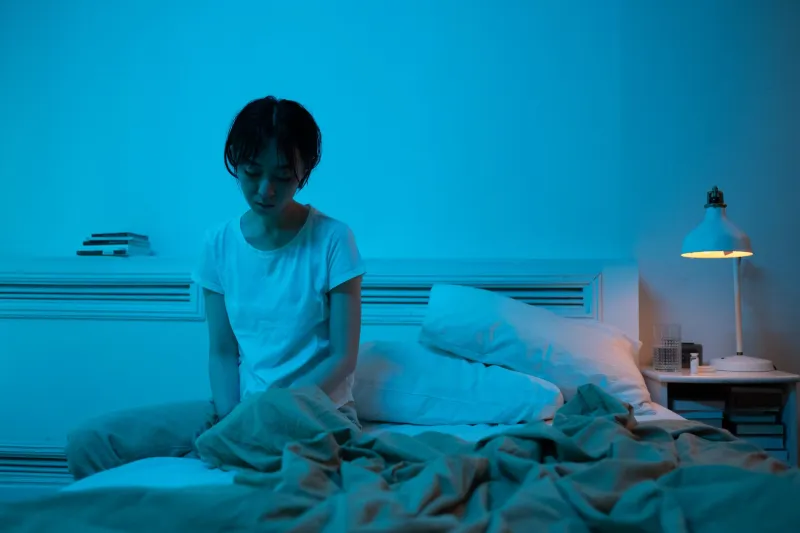
There's no official paperwork. No mediator. Nobody shows up with a clipboard and asks you to divide the streaming queue. But anyone who's gone through a bad friendship fallout or a messy romantic split knows the feeling — you pull up your watchlist a few weeks later, see that show sitting there, and your stomach does something complicated.
Anime has a way of embedding itself into the moments we share with other people. Watch enough episodes with someone, and the show stops being just a show. It becomes a timestamp. A memory. Sometimes, a wound.
So what happens to it when the relationship ends?
The Invisible Claim
Amanda, 26, from Austin, Texas, still hasn't gone back to Nana after her college best friendship imploded junior year. "We watched it together every Friday night for like three months," she says. "Now every time I think about finishing it, I feel like I'm trespassing on something that isn't mine anymore."
That sense of trespassing — of needing permission you'll never actually get — comes up a lot when fans talk about this. There's no rule that says a show belongs to the person who introduced it, or the one who cared more, or even the one who got hurt worse. But emotionally? That logic runs deep.
For a lot of fans, the unspoken protocol goes something like this: whoever brought the show into the relationship has the stronger claim. If your ex-girlfriend was the one who sat you down and made you watch Fruits Basket from the beginning, it's hers now, at least for a while. You might circle back eventually. You might not.
When the Show Becomes a Symbol
It's not always about who introduced it. Sometimes it's about what the show meant during the relationship.
Jordan, 31, from Chicago, describes watching Your Lie in April with a long-distance partner as "basically our whole relationship in anime form." When they broke up, finishing the series alone felt less like entertainment and more like a funeral. "I knew how it ended. I'd seen the last episode. But going back felt like grieving twice — once for the show and once for us."
This is the part that makes anime uniquely loaded compared to, say, a shared Netflix drama or a podcast you both liked. Anime — especially the emotionally heavy stuff — tends to ask something of you. It pulls on real feelings. When those feelings got tangled up with a real person, the show absorbs all of it.
Some fans describe avoiding entire genres after a difficult breakup. Slow-burn romance anime? Off the table. Found family storylines? Too risky. The emotional architecture of those shows maps too neatly onto what was lost.
The Reclamation Move
Not everyone retreats, though. Some fans do the opposite — they go back to the show on purpose, specifically to take it back.
Marcus, 24, from Atlanta, rewatched Haikyuu!! the week after a falling-out with his closest friend group. "That show was ours. We had a whole server dedicated to it. And when everything blew up, I thought I'd lost it too," he says. "But I rewatched it by myself and honestly? I loved it more. It became mine again instead of ours."
There's something genuinely powerful about that move. Reclaiming a show is an act of quiet defiance — a way of saying the memory doesn't get to own you. It's also, in its own way, an act of grief processing. You're separating the art from the association, which is harder than it sounds but deeply satisfying when it works.
Fandom communities have started acknowledging this openly. Threads on Reddit and Discord servers dedicated to specific shows will occasionally surface posts that start with something like, "Just rewatched this after a rough breakup and I'm not okay." The responses are almost always warm, often personal. People get it.
Fandom Fallouts Hit Differently
Romantic breakups get most of the attention, but fandom fallouts — when a friend group splinters over drama, ship wars, or just the slow drift of people going different directions — can be just as messy when it comes to shared media.
Sometimes a show becomes so associated with a specific group that it feels impossible to enjoy alone. The inside jokes, the reaction threads, the 2 a.m. Discord voice calls during a season finale — all of that is gone. What's left is just the anime, sitting there without context.
Leila, 29, from Seattle, put it plainly: "When my old fandom group fell apart, I couldn't watch Attack on Titan for two years. Not because I stopped liking it, but because watching it alone felt like showing up to a party where everyone already left."
The communal dimension of anime fandom is part of what makes these bonds so meaningful — and part of what makes losing them sting in ways that are hard to explain to people outside the community.
There's No Clean Answer
Here's the thing: there's no universal protocol. No rule that holds across every situation. Some shows stay contaminated for years and then one day, randomly, they don't. Some shows you never go back to, and that's okay too. Some you reclaim immediately and feel better for it.
What seems to matter most is giving yourself permission to feel weird about it in the first place. It's not embarrassing that a piece of media got wrapped up in your feelings for another person. That's kind of the whole point of storytelling — it meets you where you are, which means sometimes it's right there in the middle of the messiest parts of your life.
The kizuna — the bond — you formed with a show through someone else doesn't disappear when they do. It transforms. Into grief, maybe. Into nostalgia. Into something you eventually get to decide what to do with.
And sometimes, the most healing thing you can do is press play anyway.